FAI Surgery Rehabilitation - Part 1
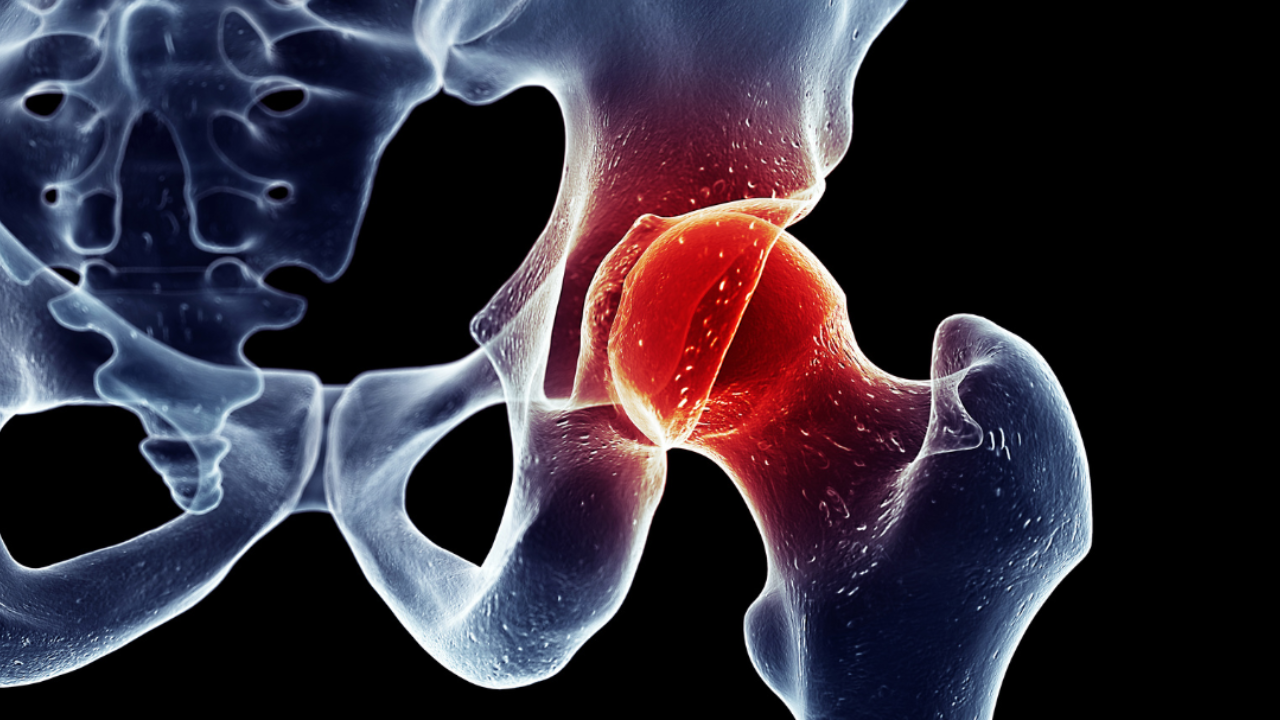
Athletic hip surgeries have been one of the fastest growing orthopedic procedures in sport in the past two decades.1 Although non-surgical management is the primary treatment for hip pain, a subset of individuals will require surgery to achieve a better outcome. FAI, or femoroacetabular impingement surgery, is the most common type of this procedure and includes corrective procedures for the labrum, cartilage, and/or bony changes around the hip joint. This will often include a repair of the labrum (the lining of the hip joint socket) and decompression of bony changes on either side of the hip joint. Although the outcomes may differ based on the specifics of the surgery and individual, long-term research suggests that they are generally favorable with low (12-18%) failure rates and good (78-94%) return to sport rates.2-6
FAI Surgery Phases
Rehabilitation following FAI surgery can be separated into three key phases: the early, middle, and return to sport stages. Part one of this blog will be focused on the pre-operative and early post-operative stages of FAI surgery.
Pre-Operative Management
The pre-operative management of FAI surgery includes all non-surgical interventions for hip pain. While studies have shown success rates as high as 82% for non-operatively managing FAI, those that do participate in rehabilitation programs and go on to have surgery also have good outcomes.7,8 As a result, it is often recommended to try a course of physical therapy for at least six months before making a decision on operative care. This time frame is variable based on the individual’s goals, but allows for the natural course of history of some cases of hip pain to resolve before making a surgical decision too quickly. Physical therapy management should be focused on both training modifications to reduce symptoms, as well as a progressive exercise plan to improve strength and load capacity in the hip.
Early Post-Operative Stage
The overarching goal of the early post-operative stage of FAI surgery is to achieve a “quiet” hip. The initial post-operative inflammation and pain needs to settle to a stable level before a progressive loading of the hip joint can become productive. Exercises at this point include muscle activation around the hip and low intensity mobility work. It’s generally recommended to avoid end-range of motion in any direction of the hip at this point, as it will be pain-limited and the post-operative area still needs time to heal. This is generally a difficult period for the athlete who always feels the need to do more and the understanding that a short-term sacrifice for long-term gain must be achieved; if an individual is too active during this period, it will take longer for the hip to settle down, longer to be able to strengthen, and ultimately longer to return to sport. It is commonly expected to be toe-touch weight bearing on crutches for 1-2 weeks following surgery (procedure- and surgeon-dependent) before progressing to partial and full weight bearing over the course of a week or two. By the end of the first post-operative month, normal activities of daily living should be tolerable within pain limits, with care taken to avoid large spikes in walking distance or other weight bearing activities per day to gradually expand the hip’s tolerance to loading. Exercises at the end of this stage will start to take the form of traditional strengthening, but with lower loads. Modalities to decrease pain or improve exercise output, such as blood flow restriction training, may be used here on a case by case basis.
Part two of this blog will expand on the middle-stage of rehab following FAI surgery. If you're looking for guidance with hip pain or decisions on FAI surgery, please reach out!
References:
- Reiman MP, Thorborg K. Femoroacetabular impingement surgery: are we moving too fast and too far beyond the evidence? Br J Sports Med. 2015;49(12):782-784.
- Baron JE, Westermann RW, Bedard NA, Willey MC, Lynch TS, Duchman KR. Is the actual failure rate of hip arthroscopy higher than most published series? An analysis of a private insurance database. Iowa Orthop J. 2020;40(1):135-142.
- Degen RM, Pan TJ, Chang B, et al. Risk of failure of primary hip arthroscopy-a population-based study. J Hip Preserv Surg. 2017;4(3):214-223.
- Chen AW, Craig MJ, Yuen LC, Ortiz-Declet V, Maldonado DR, Domb BG. Five-year outcomes and return to sport of runners undergoing hip arthroscopy for labral tears with or without femoroacetabular impingement. Am J Sports Med. 2019;47(6):1459-1466.
- Elwood R, El-Hakeem O, Singh Y, Shoman H, Weiss O, Khanduja V. Outcomes and rate of return to play in elite athletes following arthroscopic surgery of the hip. Int Orthop. 2021;45(10):2507-2517.
- Mohan R, Johnson NR, Hevesi M, Gibbs CM, Levy BA, Krych AJ. Return to sport and clinical outcomes after hip arthroscopic labral repair in young amateur athletes: minimum 2-year follow-up. Arthroscopy. 2017;33(9):1679-1684.
- Pennock AT, Bomar JD, Johnson KP, Randich K, Upasani VV. Nonoperative management of femoroacetabular impingement: a prospective study. Am J Sports Med. 2018;46(14):3415-3422.
- Schwabe MT, Clohisy JC, Cheng AL, et al. Short-term clinical outcomes of hip arthroscopy versus physical therapy in patients with femoroacetabular impingement: a systematic review and meta-analysis of randomized controlled trials. Orthop J Sports Med. 2020;8(11):2325967120968490.